Most of us describe our feelings with about three words. Science says that isn’t fine.
As a graduate student in Canada, a young psychologist agreed to a coffee date with a man she didn’t really fancy. Halfway through, her face went hot and her stomach did somersaults.
Oh, she thought. Maybe I do like him.
She agreed to a second date, went home and threw up. It wasn’t love. It was the flu.
Not the first time a man has been mistaken for a virus. Won’t be the last.
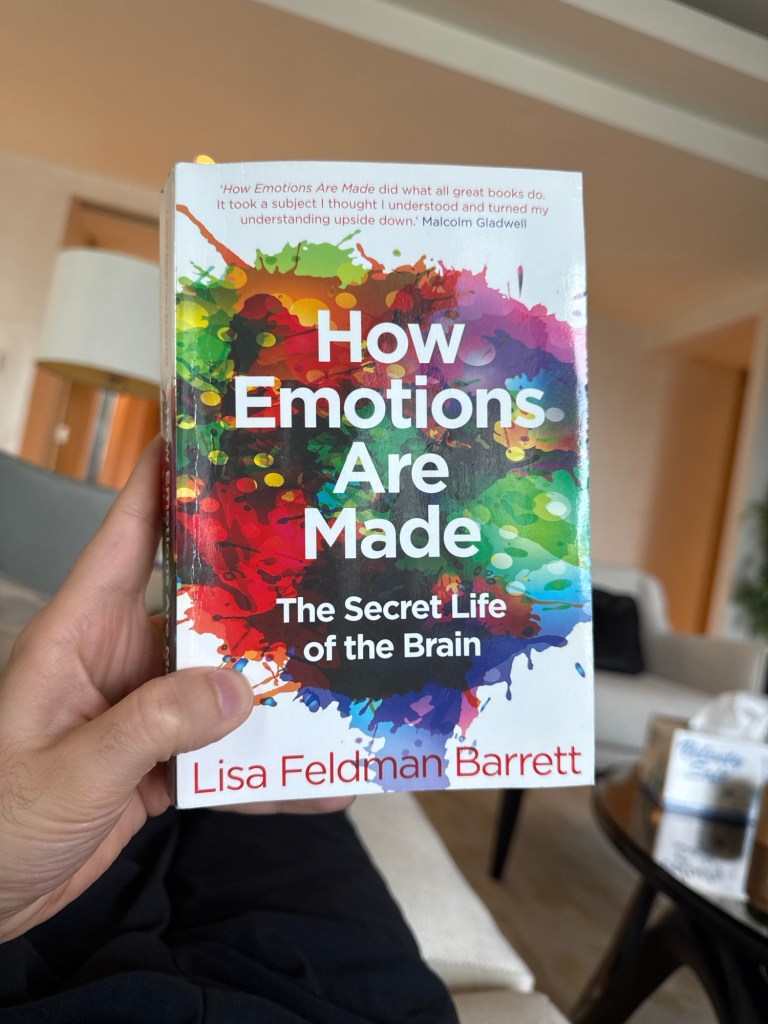
The student was Lisa Feldman Barrett, and the lesson stayed with her. Your body sends signals. Your brain guesses what they mean, using only the words it has (and this is very important to understand!)
Her career nearly died before it started. At the University of Waterloo she ran eight experiments in three years, and all eight failed. She thought about quitting. Then she saw why.
Her volunteers used “anxious” and “depressed” as if they meant the same thing. Some people simply had less words for their feelings than others.
That wasn’t a problem in the data. That was the discovery.
She called it emotional granularity. Low granularity is a blurry photo: “I feel bad.” High granularity is sharp: guilty, lonely, embarrassed, slightly jealous of my cousin’s new boat.
Does the label really matter? Isn’t bad just bad? Apparently not.
In 2010, 106 American students aged 18 to 20 used handheld computers for three weeks to record their moods and their drinking. On bad days, those who could name their feelings exactly drank less.
A 2012 study found the same with anger. People who could name their feelings precisely felt a weaker urge to hit back.
Later research showed that sharper feelings even protect sleep from stress. The body, it seems, gets tidier when the dictionary does.
Words don’t just describe a feeling. They help build it. The anthropologist Robert Levy spent 26 months in Tahiti and reported that Tahitians had no everyday word for sadness. After a death, people said they felt “sick” or “strange.” The pain was real. It just had no name.
The good news is that granularity can be learned. A 2021 study found that teaching people more emotion words made them more granular, and the effect lasted.
At Yale, Marc Brackett built the Mood Meter, a coloured grid of feeling words now used in thousands of schools. It started with 100 words. The free app he co-created, How We Feel, offers 144.
That is roughly 141 more than the average husband uses. Hungry, tired, and a third one which we don’t need to explicitly mention here 😁
And Barrett? Born in Toronto in 1963, she is now a University Distinguished Professor at Northeastern University in Boston. Her idea have travelled from a failed lab to classrooms and phones.
So next time someone asks how you are, try something braver than “fine.”
You might discover you aren’t.


Leave a Reply