Simply K

Not for everyone, but definitely for me

  • When I was a kid, planets were neat little balls in a schoolbook. Mercury was fast, Saturn had rings, Pluto was still invited to the party. Then life got in the way—three decades of work experience, bills, living in 10 countries, and the slow grind of existence. Now, thanks to Interstellar and a whisper from Stephen Hawking, I’ve returned to the solar system with adult eyes. Spoiler: it’s less “majestic universe” and more “cosmic death zoo.”

    Mercury: The Bipolar Hotplate

    Average Temp: 167 °C | Gravity: 38% of Earth

    One side hot enough to fry steel, the other cold enough to snap it. By day it’s 430 °C, by night –180 °C. A planet that can’t decide if it’s an oven or a freezer (I’m never complaining about the GCC’s oven-outside, freezer-inside lifestyle again.)

    Gravity so weak you’d spill your drink, and it would take 3 hours to hit the floor (more time to cry over it in slow motion) 

    Venus: Hotter Than Camels Can Handle

    Average Temp: 464 °C | Gravity: 91% of Earth

    Forget deserts. Venus makes the Sahara look like an ice rink. It’s hotter than camels can handle in the desert, with an atmosphere so thick you’d be crushed before you finished your first scream. Acid rain, CO₂ smog, surface hot enough to melt lead. Gravity feels nearly the same as Earth’s, which makes the place even more insulting: it feels familiar while killing you instantly. Elon Musk should stick to Mars; Venus seduces the eye, the. Crushes the soul… no wonder then the ancients called it the planet of women! 

    Earth: The Goldilocks Fluke

    Average Temp: 15 °C | Gravity: 100%

    Perfect climate, perfect balance — until humans showed up and started treating it like a rental car with full insurance. Our beloved planet is the cosmic jackpot — breathable air, drinkable water, and just enough gravity to keep your beer from floating away. Naturally, we’re using it to binge reality TV while boiling the oceans…. 

    I think of Earth as the universe’s best Airbnb: fully furnished with beautiful wonders, forests, and a gift to us by God… Guests so far? Mostly hairless apes who won’t stop setting the furniture on fire.

    Mars: Elon’s Freezer Box

    Average Temp: –65 °C | Gravity: 38% of Earth

    The great Muskian dream. Everyone drools about colonizing it, but Mars is basically a glorified meat locker with dust storms. Equator summers flirt with 20 °C, but at night you plunge to –73 °C. Gravity’s so weak your bones would dissolve over time. “Self-sustaining colonies” really means dying slower under a plastic dome while tweeting about progress. (Tweeting via X obviously, pun intended) 

    Jupiter: Endless Storm Therapy

    Average Temp: –110 °C | Gravity: 254% of Earth (if it had a surface)

    A gas giant with a permanent hurricane bigger than Earth. No solid ground, just endless pressure until you implode. Step into its gravity well and you’d be paste before you could blink. It’s the universe’s version of talk therapy: “Tell me your problems, then dissolve into gas.”

    Saturn: Beauty With a Bodyguard Badge

    Average Temp: –140 °C | Gravity: 107% of Earth (theoretically)

    Yes, the rings are gorgeous—space jewelry at its finest. But Saturn isn’t just posing for NASA’s glamour shots. It’s out there swatting asteroids like a hungover nightclub bouncer, keeping Earth from getting smacked into prehistoric reruns. Without it, we’d all be fossils in someone else’s museum exhibit. Call it what you want: protector, thug, or cosmic doorman. Saturn’s the Instagram model who also crushes skulls behind the velvet rope, making sure you get to keep scrolling through life instead of being flattened by space rubble.

    Saturn has always been the planet that most fascinated me, since I was a 12 year old rebellious little fucker to date… Check out these below facts and you might feel the same too:

    Saturn Facts

    1. It could float in a bathtub. Saturn’s density is less than water. If you could build a cosmic tub big enough, the planet would bob around like a giant beach ball. (Sure, the bath would be 120,000 km wide, but still.)

    2. The rings are razor thin. Saturn’s rings stretch hundreds of thousands of kilometers wide, yet in most places they’re only about 10–30 meters thick. That’s thinner than a building. Imagine a vinyl record the size of a planet, and you’ve got the picture.

    3. The “death storm” at its pole. Saturn has a giant hexagon-shaped storm at its north pole — a six-sided hurricane bigger than Earth itself. It’s been raging for decades, maybe centuries. Nature’s geometry flex.

    4. The planet plays music. Saturn’s auroras emit radio waves you can literally convert into sound. When NASA did this, it sounded like creepy sci-fi horror soundtracks — cosmic tinnitus.

    5. Daylight speedrun. A “day” on Saturn is just 10.7 hours. That means if you lived there, you’d get jetlag twice before breakfast.

    6. Moons, moons, moons. Saturn has at least 146 moons. Some are big (Titan is larger than Mercury), some are chunks of ice and rock. Titan alone has methane lakes and rains gasoline. Basically, it’s Earth’s insane cousin.

    7. It’s the great shield. Like Jupiter, Saturn’s gravity pulls in or deflects asteroids and comets. Without it, Earth would be an intergalactic punching bag. We owe our survival partly to Saturn’s bulk.

    8. The disappearing act. Saturn’s rings won’t last forever. They’re slowly falling into the planet, raining down at thousands of kilograms per second. Give it about 100 million years, and they’ll be gone. Humans probably too, but hey.

    Uranus: The Cold Ass of the Solar System

    Average Temp: –195 °C | Gravity: 89% of Earth

    Still funny, still freezing. Tilts on its side like a drunk at the pubs closing time. Gravity close to Earth’s, which means you’d feel right at home while instantly suffocating in methane ice clouds. Officially the coldest planet, unofficially the butt of every joke since humans discovered humor.

    Neptune: The Blue Murder Machine

    Average Temp: –200 °C | Gravity: 112% of Earth

    Colder than Uranus (see, still funny!) with winds over 2,000 km/h. Gravity a bit stronger than Earth’s, so you’d feel a touch heavier right before being shredded by supersonic winds. Pretty shade of blue though—like death wearing cologne.

    Pluto: The Solar System’s Ugly Duckling

    Average Temp: –225 °C | Gravity: 6% of Earth

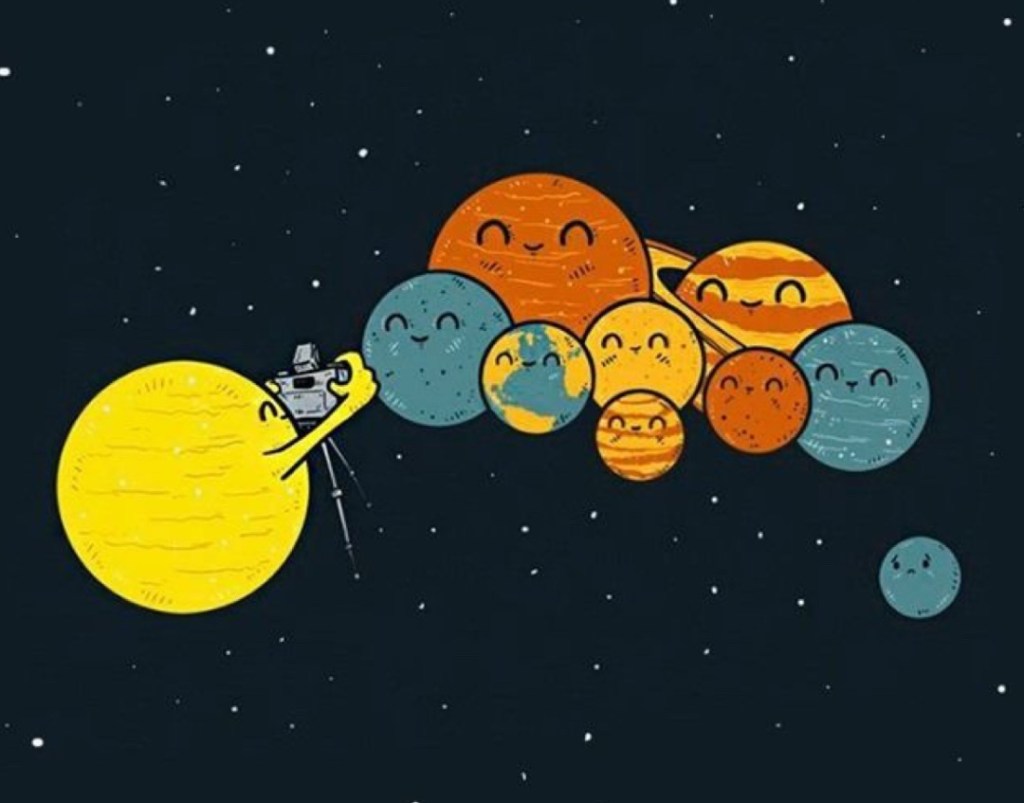
    Once a planet, now told to piss off. Banished to the edge like the unwanted stepchild Papa Sun never claimed. Too small, too scruffy, orbit all crooked — the other planets basically ghosted it. Its gravity’s so pathetic you’d hop around like a drunk on the moonshine it can’t even make. Frozen, lonely, spinning in the dark, it’s the cosmic version of that kid everyone unfriended in school but who still shows up to the reunion, hoping someone remembers his name. Poor bastard just wanted to belong.

    The Cosmic Joke

    After 30 years away, here’s the verdict: every planet is a death trap, Earth included—we’re just the idiots running the experiment in real time.

    Venus cooks, Mars chills, and Uranus… well, that one just bends over backwards to make the universe laugh.

    It’s not “a solar system full of opportunities.” It’s more like Lord of the Flies, but the conch shell is on fire and everyone’s freezing or suffocating. The only reason Earth feels like home is because it hasn’t killed us yet.

    So thank you, Interstellar, for making me sob about black holes, and thank you, Stephen Hawking, for pointing out the cosmic joke with a straight face. The universe isn’t here to cradle us—it’s here to remind us, over and over, that we’re living in the one habitable accident, and knowing this, somehow still managing to screw it up.

  • “War is always a failure of humanity” -Alexander Stubb, President of Finland

  • It took me four decades, a love-hate relationship with late-night shawarmas, and the metabolism of a sleepy sloth, but I finally figured it out. Spoiler: it’s not a magic pill, a “fat-burning” tea, or some influencer whispering “trust the process” while selling you a gummy bear (You know who you are Dr J.S 2000’s) It’s boring science mixed with ruthless consistency.

    No alcohol. Apparently, vodka tonics don’t count as hydration. Who knew.

    8,000 steps a day. Shocking discovery: moving your legs actually burns calories.

    4–6 hour eating window. Translation: you’ll basically be stalking the fridge like a raccoon until the clock says “go.”

    7 hours minimum sleep. Fat loss fairy visits during REM, not Netflix binges.

    150g of protein daily. Chicken breast becomes your new best friend. Prepare for flatulence that could clear a room.

    500–1,000 calorie deficit. Because math doesn’t care about your feelings.

    One 24-hour fast every weekend. Yes, you will question the meaning of life around hour 20.

    Creatine, magnesium, water. Because your muscles and brain are needy little pricks.

    Strength training 4x weekly. Pick up heavy things, put them down, repeat until sexy.

    Cardio twice a week. You’ll hate it, but future you will look hot in jeans.

    Sunlight 5x a week. Turns out you’re not a vampire. Who knew vitamin D mattered.

    Zero tolerance for haters. If someone hands you donuts while you’re fasting, unfriend them.

    The body doesn’t respond to wishful thinking; it responds to physics and biology. Burn more than you eat. Sleep. Don’t drown your liver in booze. That’s it. The code isn’t glamorous, but it’s unbreakable.

    You won’t be perfect—you’ll binge, you’ll skip workouts, you’ll curse at salad. But here’s the truth: you only lose if you quit. And after 42 years, I finally didn’t.

  • What brands do you associate with?

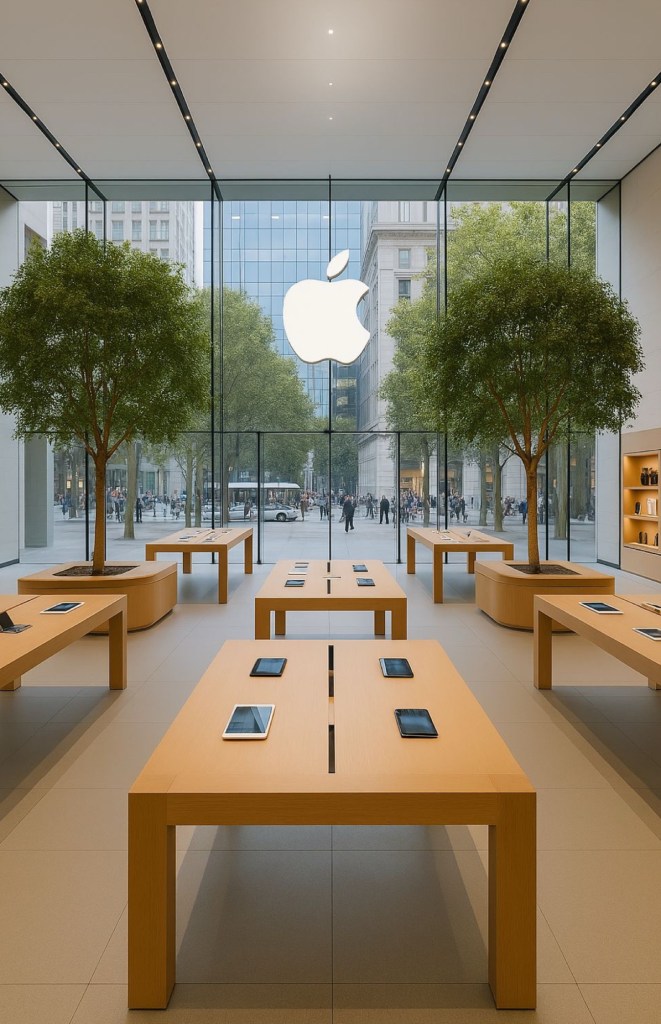
    Apple — It Doesn’t Just Sync Your Device, It Syncs Your Soul To Their Bank Account

  • Everyone knows the pharaohs. Gold masks, pyramids so massive they make your mortgage feel like pocket change, eyeliner sharper than the dagger in Caesars back and curses strong enough to make Joe Pesci sweat. But here’s the embarrassing truth: ask most people who the first pharaoh was, and you’ll get blank stares or a mumbled “Tutankhamun?” (Wrong by about 1,500 years).

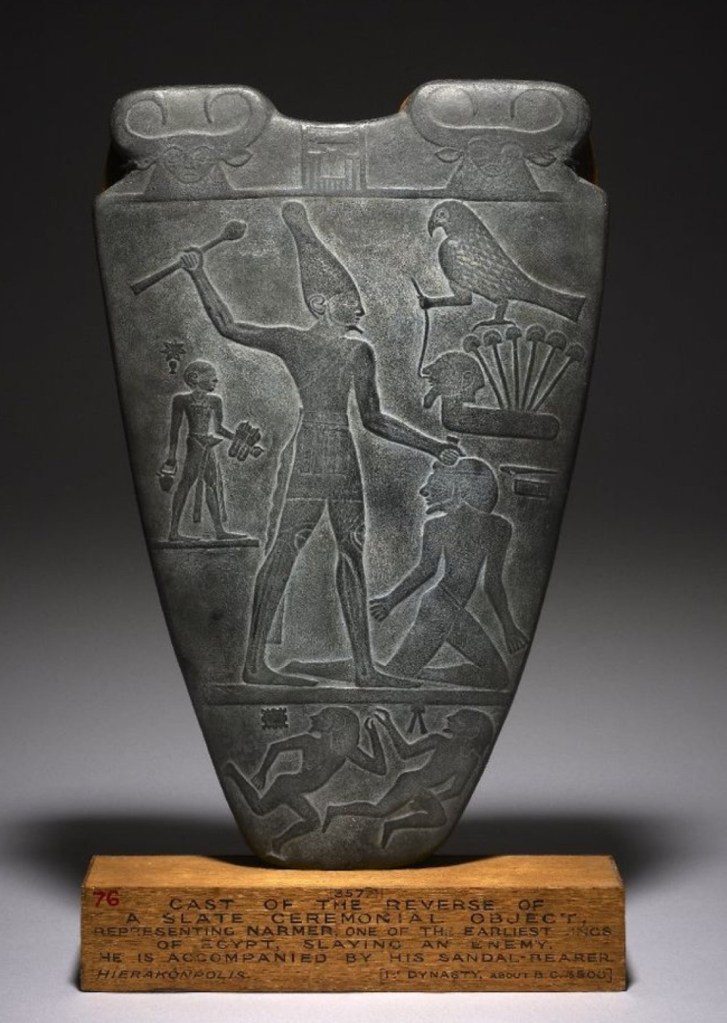
    The OG pharaoh was Narmer (aka Menes if you’re into ancient pseudonyms). Around 3100 BCE, he wasn’t just some desert warlord — he was the man who turned a messy sandbox of tribes into the idea of Egypt. He basically invented the brand before branding existed.

    Where Did This Guy Come From?

    Narmer came from Upper Egypt, the southern stretch of the Nile where the sun bakes ambition into people. His home base was probably Thinis, near Abydos, a city that specialized in producing men with egos bigger than their spears.

    At the time, Egypt was two kingdoms constantly beefing like Arsenal and Chelsea fans:

    Upper Egypt (South): desert fighters, hard and lean.

    Lower Egypt (North): lush Nile Delta farmers, fertile land, easy living, fewer swords.

    Narmer marched north, smashed skulls, and crowned himself ruler of both. The Narmer Palette — a carved stone slab — shows him literally braining an enemy. That was his press release.

    How Did He Pull It Off?

    1. Violence. Forget diplomacy — he solved problems with blunt force.

    2. Religion. Claimed Horus the falcon god had endorsed him. You can’t really argue when someone says, “God told me I’m in charge.”

    3. Propaganda. Wore both crowns, staged rituals, carved his wins into stone. Ancient PR at its finest.

    4. Infrastructure. Once unified, Egypt scaled up irrigation, farming, taxation, and trade. Bread, beer, and bureaucracy became the backbone of life (YES, they had beer — thick, porridge-like barley brews made through fermentation. Bread and beer weren’t luxuries; they were breakfast, lunch, and wages. Pyramid workers got 2–4 liters of beer a day as pay. Civilization was built slightly drunk).

    What Even Is a Pharaoh?

    The word comes from per-aa, meaning “Great House.” First it meant the palace, then the man in it. Pharaohs weren’t just kings — they were gods in human cosplay. Imagine your local politician claiming he’s half-falcon, half-sunbeam, and everyone applauding for three thousand years. That was the gig.

    Why Did Narmer Matter?

    Because he turned chaos into order. Under him:

    • The Nile’s floods fed one kingdom instead of two rivals.

    • Trade stretched into Nubia, the Levant, maybe Mesopotamia.

    • Religion and writing got standardized.

    • Monument-building became the national sport.

    Without Narmer, no pyramids, no Cleopatra, no local guides convincing you the Sphinx winks at night from a secret angle for 20 USD.. 

    The Dark Side

    Narmer wasn’t noble. He erased rival dynasties, monopolized religion and politics, and created a system where obedience to the “divine king” was obedience to cosmic order itself. His enemies weren’t just defeated — they were deleted from history. Think Stalin with better jewelry and an actual god complex.

    How Long Ago?

    Roughly 5,100 years ago. Cleopatra? She lived closer to us than to Narmer. By the time Rome strutted onto the stage, Narmer was already ancient myth.

    The Legacy

    Narmer didn’t just unify Egypt — he made it rich, stable, and just tipsy enough to function. Centralized rule meant predictable food, trade wages, and organized labor. He laid the blueprint for 3,000 years of pharaohs: god at the top, peasants at the bottom, everyone else pretending it was destiny.

    And if I can channel my favorite physician Dr Gabor Maté: “humans will tolerate almost anything — taxes, war, even forced labor — if they believe it’s sacred. Wrap power in myth, and obedience stops feeling like oppression and starts feeling like devotion”. That’s Narmer’s true genius: not the violence, but the story he sold.

    Final thought: Aliens didn’t build the pyramids. Slightly drunk Egyptians did — on bread, beer, and blind faith in a man who called himself divine. And honestly? That’s far more impressive.

  • The warmth of the sun in winter ✨

  • The Voynich Manuscript

    Somewhere in Yale’s Beinecke Library sits a book that doesn’t want to be understood. About 240 pages of carefully drawn plants that don’t exist, zodiac wheels that don’t match the stars, and women—always women—soaking in strange green pools and climbing through pipes like characters in a medieval fever dream.. Its script? Not Latin, not Greek, not Arabic. No known alphabet at all. This is the Voynich Manuscript, and it’s been laughing at humanity since the 15th century.

    Carbon dating says the vellum came from the early 1400s, which rules out modern hoaxers. And yet nobody—not World War codebreakers, not CIA cryptographers, not modern AI—has cracked its writing. It has grammar, rhythm, structure. It looks like a language. But it belongs to no tongue we’ve ever spoken.

    What Ifs That Refuse to Die

    What if it’s a medical guide from a lost civilization, its remedies now forever out of reach? What if it’s an alchemical recipe book, the secret to transmutation sitting in plain sight, locked away by symbols only initiates could read? What if it’s deliberately unreadable, a prank by some medieval trickster who invented a fake language to toy with the future? What if it’s alien, a field guide left behind by visitors cataloguing plants and rituals from a world that wasn’t theirs? What if it was never meant for us at all—what if we are simply the wrong readers?

    The Naked Women

    They’re the most unsettling detail. Not drawn with erotic flourish, not with religious reverence, just floating, bathing, and climbing through strange vessels as though participating in some ritual or experiment.. Fertility rites? Medical diagrams? Or something far stranger: beings caught in the middle of knowledge we cannot name.

    Why It Still Haunts Us

    If it were nonsense, our best cryptographers would have dismissed it centuries ago. But it isn’t nonsense—the structure is too tight, the rules too consistent. It feels like language, like meaning, but meaning held just out of reach.

    And so the manuscript waits, locked in its glass case, its pages turning only for researchers doomed to join the list of failures.

    Final Whisper

    What if the book was never meant to be solved? What if its power lies in the torment of mystery itself—in keeping us looking, guessing, forever unsatisfied? What if the Voynich Manuscript is less a book, and more a mirror, reflecting our endless hunger for answers we may never deserve?

  • After years of trial, error, and a few awkward trips to the pharmacy, whilst in Athens, I stumbled on what can only be described as the Holy Grail of libido food mixes. Forget overpriced pills with names that sound like rejected Transformer characters—this is real food, real chemistry, and it works.

    It started innocently enough. A bit of watermelon here, some pomegranate there. “Good for the heart,” they said. Turns out, it’s even better for other organs… the ones that don’t do much thinking but can certainly change your weekend plans.

    Then came the walnuts and almonds—because nothing screams masculinity like standing in the kitchen grinding nuts into a blender. Add a handful of pumpkin seeds and down a pill of zinc, which your body uses to make testosterone and Voilá… Think of it as topping up your ammunition reserves.

    Like my horns?

    For flavour (and plausible deniability when guests ask about the mess in the blender), I threw in dark chocolate and a scoop of maca root powder—the Peruvian powder that somehow manages to make your trousers tighter in all the wrong places. Sprinkle in a bit of fenugreek and garlic, and suddenly you’re mixing something that could resurrect a monastery.

    The result? A smoothie that doesn’t just boost libido—it recalibrates your entire operating system. More drive, more volume, more “how are you still going?” looks from across the bed. Drink it daily and, within weeks, you’ll start to feel like you’ve hijacked a Greek god’s Tinder profile.

    So there it is: my discovery, my grail, my unsolicited public service announcement. The blend that proves science, sin, and smoothies can coexist. Drink responsibly—or irresponsibly, depending on your weekend plans. 🙂

  • Forget the French vineyards and Italian grape stomps—wine’s true origin story starts in China. Around 7000 BC, in the Neolithic Yangshao culture of Henan, someone left a clay jar of rice, honey, and hawthorn berries lying about. Wild yeast gate-crashed, got drunk on sugar, and—ta-da—the world’s first booze was born. Archaeologists found the residue, which is basically the ancient equivalent of sticky bar floors.

    By the Shang Dynasty (1600–1046 BC), wine wasn’t just accidental; it was official state business.. Bronze vats bigger than hot tubs were dug up—used to serve alcohol to ancestors & guests. Imagine inviting your dead grandma to dinner and thinking, “better bring another keg.”

    Then came the Zhou Dynasty (1046–256 BC), where wine was woven into rituals, politics, and excessive feasting. Chinese texts even complained that court officials were hammered on the job. Congratulations, ancient China—you invented both wine and HR problems..

    By the Han Dynasty (206 BC–220 AD), things really leveled up. Thanks to the Silk Road, grapevines & winemaking techniques made their way in from Central Asia. Suddenly China had grape wine alongside their fruit-and-rice brews. It was globalization before globalization.

    And Europe? They showed up late to the party. The earliest solid evidence of winemaking in the Caucasus region (modern Georgia) dates back to 6000 BC, but wine didn’t really strut into the Mediterranean spotlight until much later—thanks to those same Silk Road and trade routes. By around 2000–1000 BC, grape wine had made its way west, where the Greeks elevated it to a god (literally, Dionysus), and the Romans industrialized it with vineyards, barrels, and binge-drinking festivals that make Oktoberfest look tame.

    So the truth is this: China discovered the recipe, Central Asia spread the grape gospel, and Europe turned it into a cultural identity. From ancestor offerings to Roman orgies, all because some Neolithic villager didn’t throw out spoiled rice juice.

    Next time someone swirls a Bordeaux and mutters about “terroir,” remind them that wine is 9,000 years of humans refusing to pour out dodgy leftovers.

  • Daily writing prompt
    Share a lesson you wish you had learned earlier in life.

    Not Every Friend is a “Friend”…

    Not every friend is a friend. And family will sometimes stick the knife in with better aim. Still, once you’ve had your fair share of treachery, you realize it’s one of life’s lessons, teaching you how to refine your guest list. Consider it natural selection on your inner circle