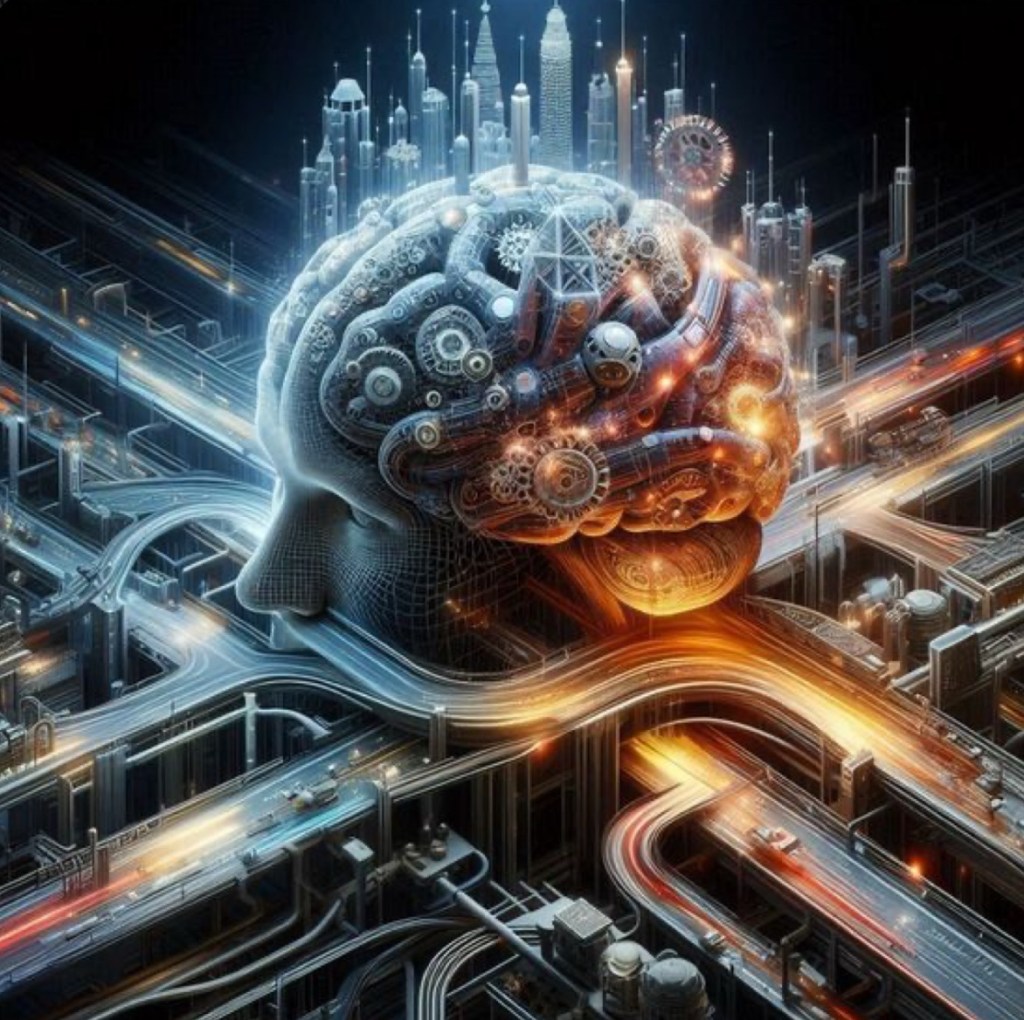
Here’s the idea.
Your brain is not reacting to the world.
Your brain is guessing what’s about to happen, then checking if it was wrong.
You don’t see reality.
You see your brain’s best prediction of reality.
That’s predictive processing.
How it works (the simple loop)
Your brain is constantly doing this:
“Here’s what I think is happening.” Reality sends data. The brain checks the difference. It either updates the belief or ignores the data.
That gap is called a prediction error.
The brain actually spends more energy predicting than sensing. Sensory input is mostly used to correct mistakes, not build experience from scratch.
Why this explains a lot of human nonsense
Anxiety
The brain predicts danger first. Neutral situations feel threatening.
Depression
The brain predicts failure or loss, so positive events don’t register properly.
ADHD
The brain craves novelty because prediction errors release dopamine. Routine feels dead because nothing surprises the system.
If you want a reaction at the table, say this:
“My brain gets bored when it’s right.”
Why calm feels weird
If your nervous system is used to chaos, calm feels suspicious.
No alarms = no signals = “something must be wrong”.
That’s why silence can feel uncomfortable and stillness can feel unsettling.
Your brain learned to survive noise.
The important part
You don’t change your mind by arguing with yourself.
You change your mind by changing signals from the body:
Breathing
Posture
Touch
Familiar voices
Repetition
The body convinces the brain.
Thoughts are late to the meeting.
The pub mic-drop line
End with this and sip your drink:
“We don’t experience reality. We experience a prediction that usually works well enough to keep us alive.”
If someone argues, congratulations.
You’ve just created a prediction error.
 Simply K
Leave a comment